

УчитываярастущийглобальныйспроснаминералыиметаллыинеопределенностьвсвязисглобальнымиизменениямиклиматагорнодобывающиекомпаниисталкиваютсяссерьезнымипроизводственнымивызовамисвязаннымисуправлениемводнымиресурсамиповторнымиспользованиемводыснижениемрисковисоблюдениемстрогихрегуляторныхтребованийВобластигорнодобывающихоперацийизбыточноеилинедостаточноеколичествоводыможетзначительноповлиятьнадобычурудыздоровьеибезопасностьлюдейатакженаокружающуюсредуПоэтомустановитсякрайневажнымразработатьвсестороннеепониманиеперемещенияводыкакнатерриторииместорождениятакизаеепределамиэтоназываетсяводнымбалансом
Водныйбалансдлядостижениярезультатов
этоинновационноепрограммноерешениенедавноразработанноекомпаниейвсотрудничествесбразильскойтранснациональнойкорпорациейзанимающейсяметаллургиейигорнымделомпомогаетполучитьколичественноепониманиеиспользованияпотоковводыкакнатерриториитакизаеепределамипомогаяуправляющимлучшепланироватьсвоиводныепотребностиипредугадыватьпотенциальныерискииззанеисправностейоборудованияобслуживанияобъектовинепредвиденныхизмененийклимата
построеннабазеданныхсудобныминтерфейсомкоторыйпозволяетпользователямбыстросоздаватьводныесхемыипросматриватьрезультатыв
комплекснойпанелиуправленияСистемапредлагаетмножествовариантовдляназначенияводныхструктуртакихкакскважиныдлязаборовподземныхводдренажныескважинырезервуарынакопителирезервуарыидратакжедляопределениядинамическихпотоковыхсоединенийдляпредставленияобъемовводыпотоковиконцентрацийРезультатпохожнаблоксхемуоднакоинтегрируетданныеирасчетыдинамическипоказываявзаимосвязьмеждуструктурамиикакизменениявпотокахводыбудутвлиятьнаоперациивверхпопотокуиливнизпопотокуупрощаетпроцесссозданиянастоящеговодногобалансаивтожевремяпредоставляетвозможностьоценитьустойчивостькизменениямвводеЭтопомогаетуправляющимглубжепонятьсвойводныйбалансипредоставляетинструментыдляпринятияобоснованныхрешенийдляулучшенияиспользованияводынатерриторииидостиженияцелей
Синергиямеждуивразработкепредставляетсобойзначительныйшагвпередвпоискепрактическихиэффективныхрешений
ФредерикоАлмейдаработаетвсектореводныхресурсовкомпанииПословамФредериковыделяетсятемчтоэтоисключительновизуальныйинструментилегкостьскоторойможностроитьпотокиявляетсяотличительнойчертойпосколькудляиспользованиянетребуетсяглубокихзнанийпрограммирования
ДействиякоторыераньшезанималинеделютеперьдаютмгновенныеданныеКрометогомыотмечаемснижениезатраттаккакинформациякотораятеперьподдерживаетстратегическиерешенияговоритАлмейда

Sustainability and Operational Efficiency in Mining
Water management is a constant priority for mines seeking to enhance operational efficiency. With water being a potentially costly resource, mines often explore alternatives or strategies for water release to maintain efficiency. To address these challenges, mines require tools that provide accurate assessments of their water balance.
Let’s delve into a couple of scenarios mines might encounter:
Imagine a scenario where your mine relies entirely on four groundwater pumping wells to sustain its operations. In this setup, 80% of the water is utilized across various crucial processes like ore cleaning, processing, dust control, office use, and ore transportation. The remaining 20% is treated and released into a downstream river. All seems well until one of these vital pumping wells unexpectedly malfunctions or requires scheduled maintenance. Suddenly, the loss of a single well translates into a significant depletion of water supply across different sections of the facility, inevitably leading to a slowdown in overall ore processing until the pump is back online.
Now picture having access to a software application that empowers you to proactively assess the potential risks stemming from such shutdowns. This tool not only facilitates a detailed analysis but also allows for dynamic testing and redistribution of water reuse scenarios across various locations within the mine. Through this simulation, you might discover that while certain parts of the facility are severely impacted, others remain unaffected. This capability enables mine managers to anticipate such scenarios in advance, ensuring swift responses and potentially saving considerable time and resources.
Now, let’s consider the scenario of water resilience and sustainability against the backdrop of climate change on a global scale.
As the effects of global climate change manifest in altered precipitation patterns worldwide, mines are increasingly aware of the long-term risks posed to their operations, particularly regarding water resilience and sustainability. While proactive planning for water-related risks can aid in anticipating challenges, it’s worth noting that sometimes the necessary tools for such foresight may go underutilized.
Reflecting on a personal encounter during a visit to Australia in the 1990s, I met a hydrogeologist who was actively seeking a tool capable of predicting how climate change would impact surface water and groundwater recharge. At that time, the concept of «global warming» wasn’t as widely understood as it is today. Nevertheless, the urgency of his quest was crystal clear. His firm had undertaken a project to construct a reservoir to supply water to a copper mine nestled in a valley in southern Australia. The valley’s extensive historical water data, coupled with its strategic proximity to infrastructure and the mine itself, made it an ideal location for the reservoir. For years, the valley had been replenished by substantial rainfall, ensuring a steady water supply for the mine’s operations—until weather patterns shifted. In subsequent years following the reservoir’s completion, precipitation veered eastward, diverting the majority of rainfall to another valley. The resulting water scarcity posed significant challenges and incurred substantial costs for the mine. This example underscores the critical importance of scenario testing, particularly in the face of global climate change. Mines are now elevating their water resilience planning efforts to a new level, encompassing not only site-specific water availability but also the broader implications of climate change.
In both of these examples, grasping the intricacies of operational water balance emerges as a cornerstone for a mine’s sustainable and enduring operation. Whether the focus is on day-to-day activities within the mine or adopting a broader perspective that accounts for the impacts of climate change, having the ability to access a tool for scenario testing water impacts can prove invaluable in terms of both time and cost savings.
Understanding the nuances of water management within a mine’s operations is essential for maintaining efficiency, productivity, and environmental stewardship. By effectively managing water resources, mines can mitigate risks, maximize water reuse, optimize processes, and uphold sustainability objectives. Additionally, considering the evolving challenges posed by climate change, such as shifting precipitation patterns and heightened water scarcity, underscores the need for proactive planning and strategic decision-making.
By leveraging tools that enable scenario testing of water impacts, mines can anticipate challenges, explore alternative strategies, and ultimately make informed decisions to safeguard their operations in the long term. Investing in comprehensive water management solutions not only enhances operational resilience but also contributes to the overall sustainability and viability of mining activities.

Introducing Visual Water Balance: Revolutionizing Water Management in Mining
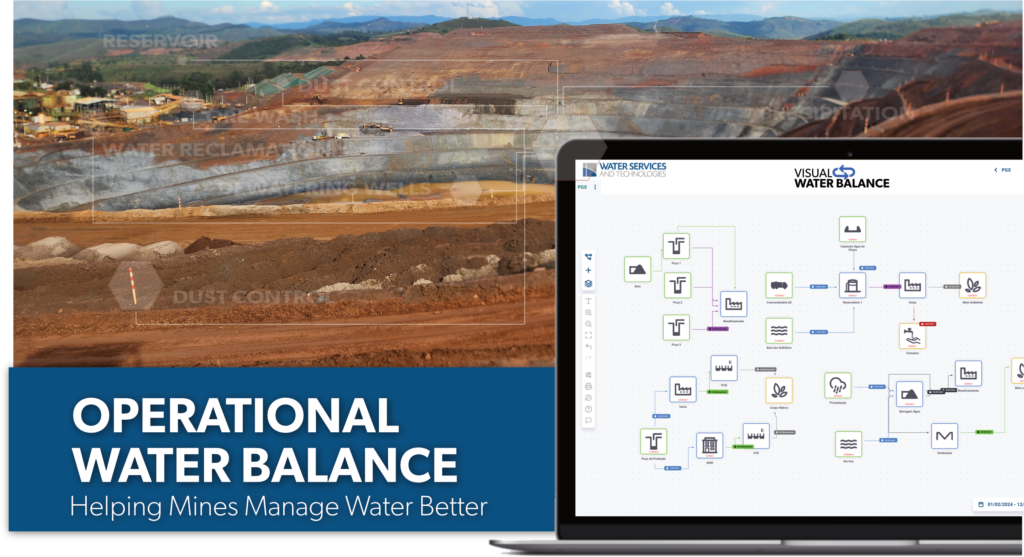
Visual Water Balance stands as a groundbreaking software solution designed to empower mines in comprehending their operational water balance. From constructing water circuits and mapping water structures to stress-testing scenarios, this toolset equips mines with the means to delve deeper into their water management dynamics, ultimately aiding in risk mitigation and the enhancement of water sustainability.
Vinicius Araujo, Visual Water Balance Product Owner, emphasizes the transformative impact of the software: «By enabling managers to visualize and analyze their company’s water circuits in real-time, Visual Water Balance simplifies the identification of areas of concern and facilitates informed decision-making on optimizing the use of water resources across various operations.»
A standout feature of Visual Water Balance lies in its ability to pinpoint inefficient processes and highlight opportunities for water reuse. By doing so, the software not only drives down operating costs but also contributes to the preservation of precious water resources. With Visual Water Balance as a cornerstone, companies embark on a journey towards sustainability, leveraging technology to make meaningful strides in water management efficiency.
VWB comprises of three core modules: the Water Circuit, Maps, and Dashboard. Seamlessly interconnected, these modules empower users to effortlessly navigate between them, gaining deeper insights into their operational water balance.
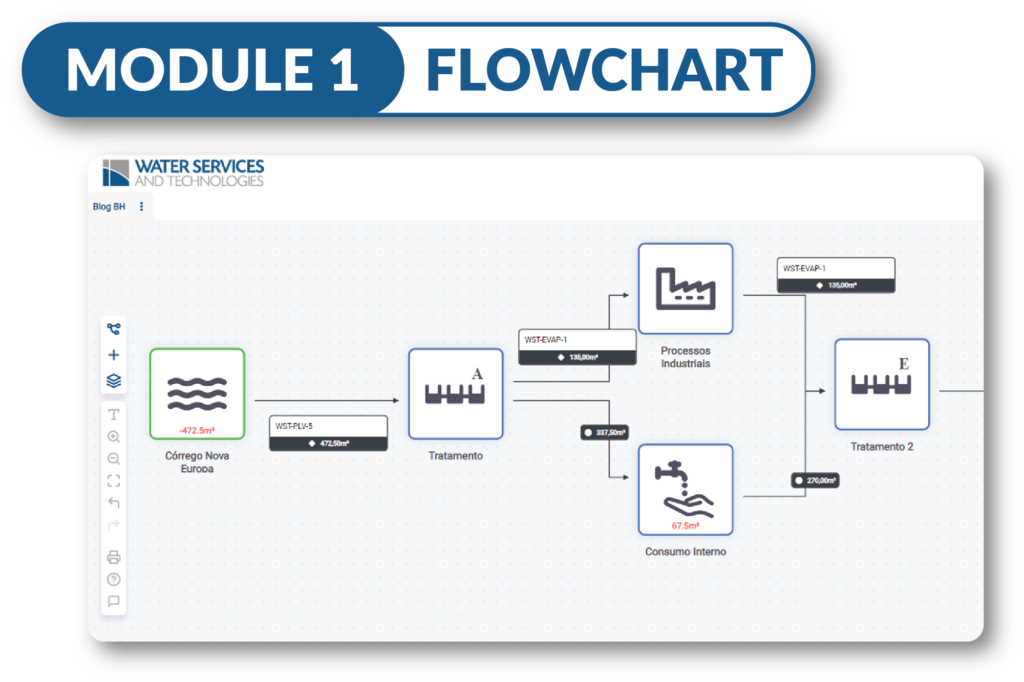
Imagine a CAD-like environment tailored for water management—welcome to the Water Circuit module. Here, users craft a dynamic workflow diagram of their mine site, illustrating all water-utilizing structures and their interconnectedness. Flow lines represent the exchange of water volumes between these structures, automatically adjusting as flow rates change. This dynamic system enables mines to swiftly respond to unforeseen impacts and proactively explore various scenarios. Unlike traditional CAD setups with static values, VWB’s dynamic interface ensures rapid adaptation to operational changes, with adjustments automatically cascading across the entire water network.
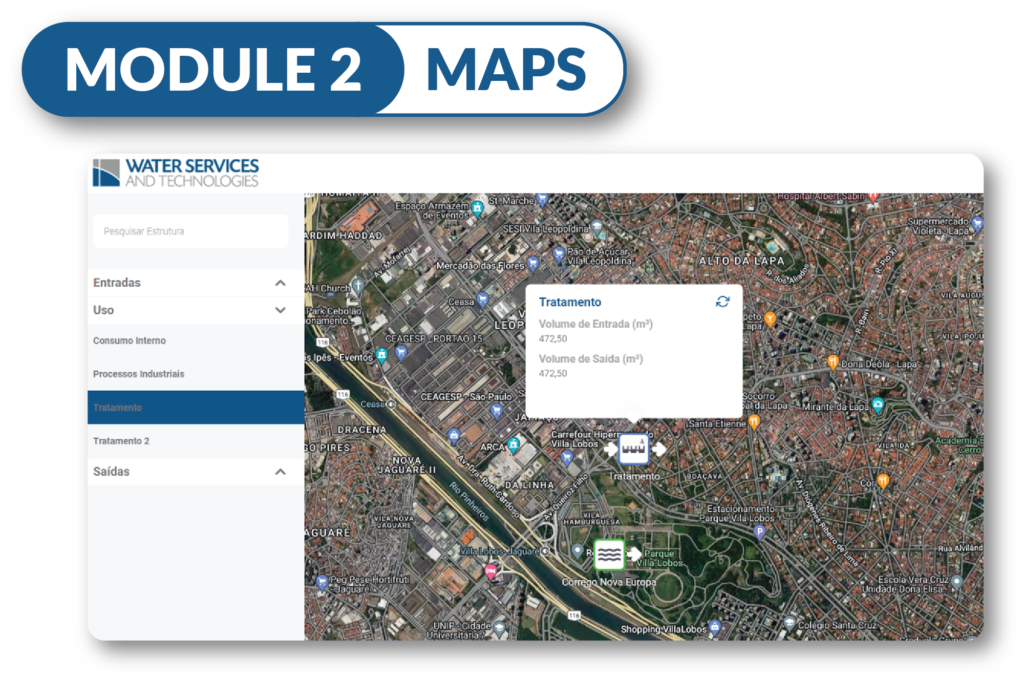
In the Maps module, users gain a holistic view of their water system structures within their geographical context. Beyond the mine’s confines, this feature allows users to visualize interactions with external stakeholders like neighboring communities, indigenous lands, and environmental conservation areas. The Maps module serves as a potent visual aid for internal and external presentations, enhancing communication and understanding.
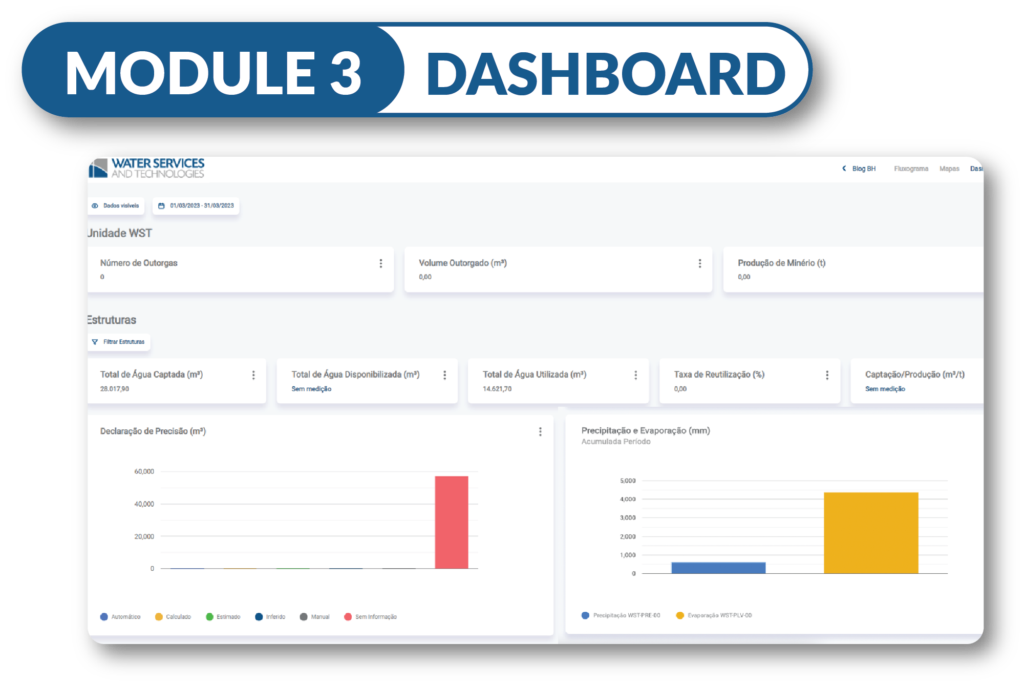
The Dashboard module offers a concise visual representation of essential data metrics crucial for mine management. Fully customizable, this feature empowers managers to monitor water supply, access key performance indicators (KPIs), and detect emerging trends or issues. Whether tracking water consumption, supply fluctuations, or production-related metrics, the Dashboard equips managers with actionable insights to optimize water management practices and mitigate potential crises.
With VWB’s comprehensive suite of modules, mine operators can efficiently manage their water resources, anticipate challenges, and make informed decisions to drive sustainable operations.
A SYSTEM THAT ALLOWS FOR COMPLETE AUTONOMY
Visual Water Balance’s usability is greatly enhanced by the autonomy it provides users. This autonomy allows individuals to dynamically map their water flows without continually depending on field experts. Users can autonomously adjust their water circuits without the need for consultants. Updating flows, connecting meters, and observing automatic results become effortless tasks for users.
This independence in managing their flows accelerates processes and empowers internal teams to swiftly make informed decisions.
In conclusion, Visual Water Balance emerges as a transformative solution poised to revolutionize water management in mining operations. With the ever-increasing demands on mineral resources and the mounting uncertainties surrounding climate change, the need for efficient water management has never been more critical.
By offering a comprehensive suite of modules, Visual Water Balance equips mine operators with the tools needed to navigate complex water management challenges. From crafting dynamic water circuits to visualizing water structures on interactive maps and monitoring key metrics through customizable dashboards, VWB provides a holistic approach to understanding and optimizing water usage.
The testimonials from industry experts and the real-life examples underscore the tangible benefits of adopting Visual Water Balance. From cost savings and operational efficiency to environmental stewardship and regulatory compliance, VWB empowers mines to make informed decisions that drive sustainable growth and resilience.
We invite you to embark on a journey towards enhanced water management efficiency and sustainability by trying Visual Water Balance today. Take the first step towards optimizing your operations, mitigating risks, and securing a sustainable future for your mining endeavors.
Interested in learning more about Visual Water Balance and how it can be applied at your mine site?
Author

Martin Draeger, B.E.S.
Managing Partner, Director Business Development and Strategic Marketing
Water Services and Technologies | Canada
295 Hagey Blvd., 1st Floor, Waterloo, ON Canada
Tel. 519-807-9844
Email: [email protected]