- SERVICES
Technology Spotlight | New for 2025
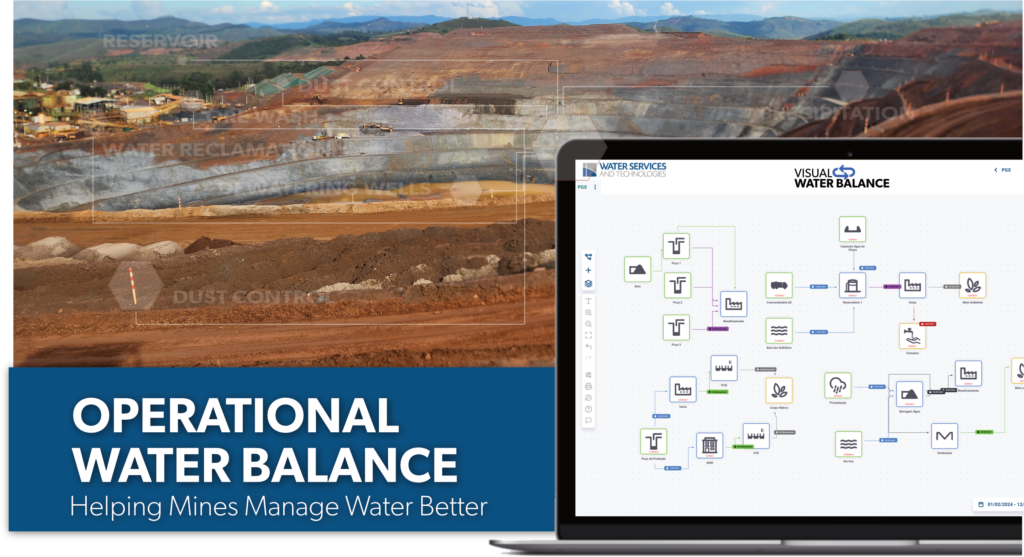
Learn more about how to manage your water balance
- PROJECTS
- DIGITAL
Technology Spotlight | New for 2025
Learn more about how to manage your water balance
- PRODUCTS
Technology Spotlight | New for 2025
Learn more about how to manage your water balance
- EVENTS
- BLOG
WST PFAS Webinar Series – Enhancing PFAS Remediation: Design and Performance Monitoring with Data-Driven Visualization

Visual PFASTM radial diagrams and stacked bar maps provide important tools for evaluating the complex datasets associated with PFAS in-situ remediation. This webinar presents a detailed case study where PlumeStop® was successfully used to form a permeable sorption barrier, including:
- Review of site characteristics which influence the design and longevity of permeable sorption barriers
- Examples of how using in-situ chemical oxidation or bioremediation may result in adverse impacts from enhanced precursor transformations
- Model calibrated field-scale adsorption isotherms for short- and long-chain PFAS
- Demonstration of a wide range of visualization methods for improving our understanding of remediation results
- Illustration of the importance of using PFAS exceedance and non-detect symbols on radial diagrams to visualize the success of remediation efforts
- A case study of how Visual PFASTM specialized radial diagrams support the delineation of groundwater redox zones for evaluating precursor transformation pathways
The use of Visual PFASTM for evaluating in-situ PFAS remediation performance is shown in a hands-on demonstration with an example site.
Presented by:
Grant Carey, Ph.D.
Dr. Grant Carey is President of Porewater Solutions with more than 30 years of experience specializing in the characterization, modeling, and remediation of many impacted sites across North America. Grant also specializes in the development of innovative modeling and visualization tools for conducting PFAS forensic assessments and for evaluating long-term remediation strategies. Grant is currently involved with five SERDP-ESTCP projects where his main research focus is on PFAS transport and remediation. Grant is also an Adjunct Research Professor at Carleton University in Ottawa, Ontario.