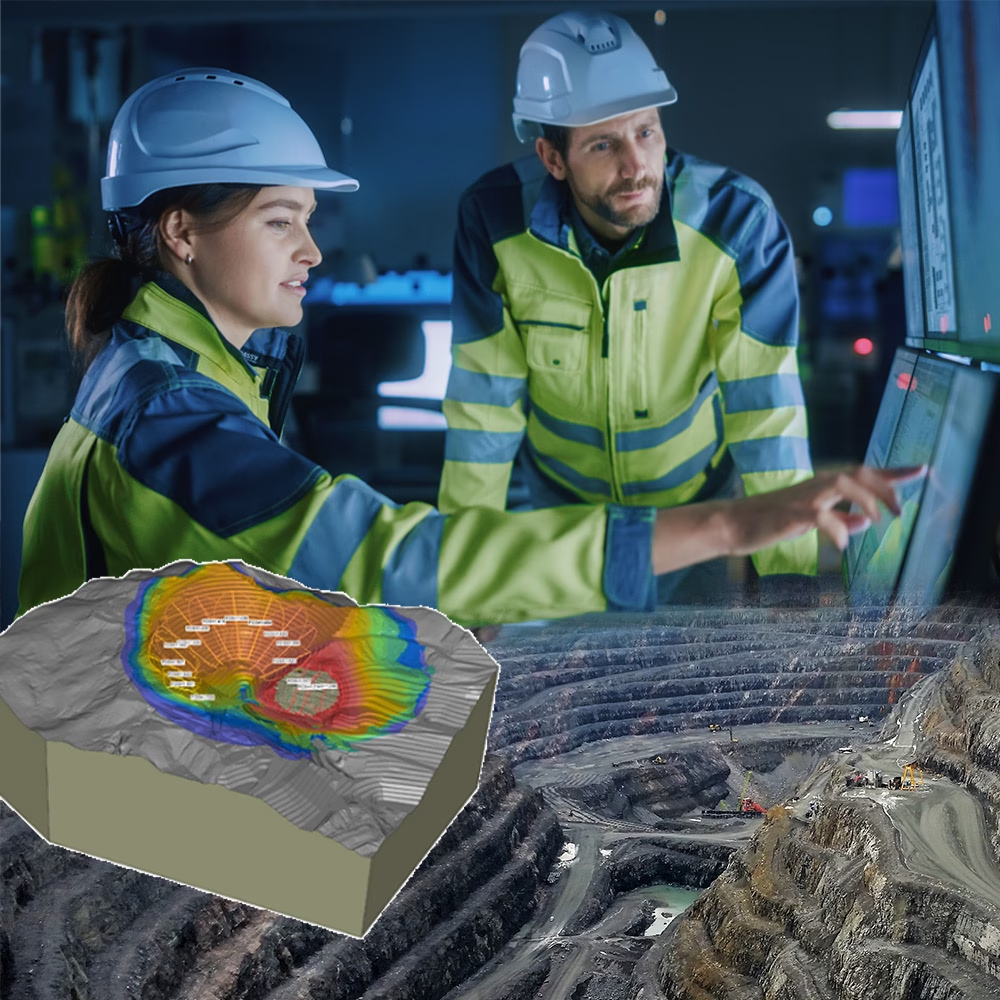
Accelerate Decisions, Minimize Risks with Advanced Modeling
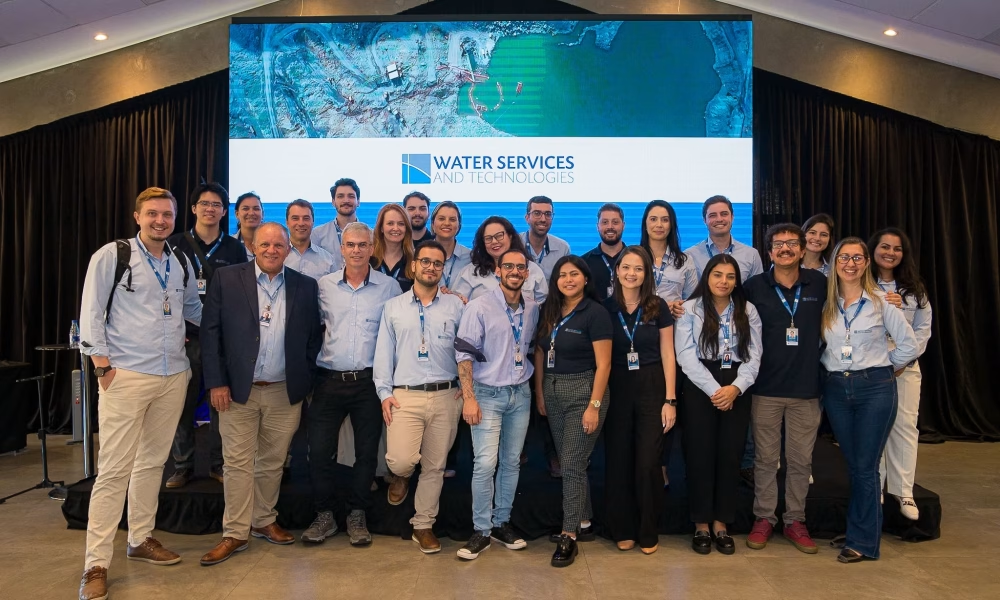
Numerical modeling is at the core of what we do, providing essential insights to guide critical decisions for water supply, optimization of operations, and mitigation of environmental contamination. From ensuring reliable domestic and industrial water resources to addressing complex challenges like dewatering and contaminant transport, our models support sustainable development while safeguarding the environment and human health. With a team of world-class modelers, including our founder Dr. Nilson Guiguer, who has pioneered industry-standard modeling codes like Visual MODFLOW, FLOWPATH, and many more, we deliver unparalleled expertise in numerical modeling.
Our models empower clients to plan, act, and remediate with confidence, transforming data into actionable solutions that protect resources, reduce risks, and optimize operations.
Why We Model: Applications and Benefits That Reduce Costs and Mitigate Risks
Numerical modeling is an essential tool in understanding and managing complex groundwater and environmental systems. By simulating real-world conditions, our models empower clients to make informed decisions, optimize resource use, and develop strategies that reduce costs and mitigate risks. Whether addressing water supply challenges, mine dewatering, or contamination remediation, our models provide the precision and insights needed to protect the environment and ensure long-term sustainability.
The Evolution of Hydrogeological Modeling with Nilson Guiguer, Ph.D., CEO at Water Services and Technologies.
Watch the full interview:
In this interview, Nilson shares his journey—from the early challenges to the impact of graphical interfaces in expanding access to modeling. Watch now to learn more about the transformation of the field!
Numerical Modeling Applications and Benefits: Transforming Data Into Actionable Insights for Sustainable Management
Mining and Resource Extraction
Mines: Studies to Optimize Water Resources and Mitigate Risks to Operations
Predict groundwater inflows to optimize dewatering systems.
Maintain safe mining operations by controlling water table levels.
Evaluate long-term impacts on surrounding water resources and aquifers.
Quantify effects on base flow and regional groundwater systems.
Minimize environmental impacts on surrounding ecosystems.
Optimize pumping strategies to balance costs and performance.
Predict long-term drawdown and impacts on regional aquifers.
Environmental Protection and Compliance
Groundwater Contamination: Protecting Resources From Contaminant Migration
Delineate contaminant plumes and migration pathways.
Assess risks to drinking water supplies and ecological receptors.
Develop targeted remediation strategies for effective intervention.
Simulate contaminant transport under varying hydrogeological conditions.
Industrial Site Remediation: Tailored Solutions for Complex Cleanup Challenges
Design and optimize groundwater remediation systems.
Evaluate the effectiveness of remediation technologies for complex sites.
Quantify potential impacts of residual contamination on local aquifers.
Develop regulatory-compliant action plans for site management.
Environmental Impact Assessments: Ensuring Compliance and Sustainable Practices
Evaluate impacts of industrial and developmental activities on water resources.
Provide detailed groundwater modeling to support compliance efforts.
Quantify interactions between surface and groundwater systems.
Develop sustainable water management and mitigation strategies.
Water Supply and Resource Management
Agricultural Water Use: Promoting Sustainable Practices for Vital Resources
Estimate aquifer recharge under various land use and climate scenarios.
Optimize water use strategies for sustainable agricultural practices.
Model interactions between irrigation practices and aquifer health.
Assess the long-term impacts of agriculture on regional water resources.
Climate Resilience Planning: Preparing for Water Security in a Changing World
Model changes in groundwater availability due to climate variability.
Quantify risks to water security and ecosystem health.
Develop adaptive management strategies for climate resilience.
Forecast impacts on aquifer recharge and discharge rates.
Infrastructure Protection: Safeguarding Critical Assets From Groundwater Risks
Simulate groundwater interactions with critical infrastructure.
Assess risks of foundation instability and subsurface erosion.
Develop preemptive mitigation measures to protect assets.
Ensure long-term stability of pipelines, buildings, and other structures.
Our Proven Approach to Groundwater and Contaminant Transport Modeling:
Dynamic Steps That Deliver Insights, Drive Decisions, and Achieve Results
We take a systematic and innovative approach to transform complex hydrogeological challenges into actionable solutions. From data collection to decision-making, our methodology ensures precision, reliability, and sustainable outcomes at every step.
Our Modeling Technology Stack: Building Models and Simulating Environmental Conditions to Support Decisions
Numerical models are indispensable tools for reducing costs and minimizing risks in water resource management and environmental protection. By simulating complex hydrogeological conditions, our models provide reliable insights to support informed decisions. With decades of expertise in groundwater and contaminant transport modeling, our team combines technical precision with a commitment to customer satisfaction and trust in hydrogeological sciences. This approach ensures a comprehensive understanding of each challenge, empowering our clients to address issues effectively and sustainably.
Groundwater and Contaminant Transport Models
Groundwater Flow Models
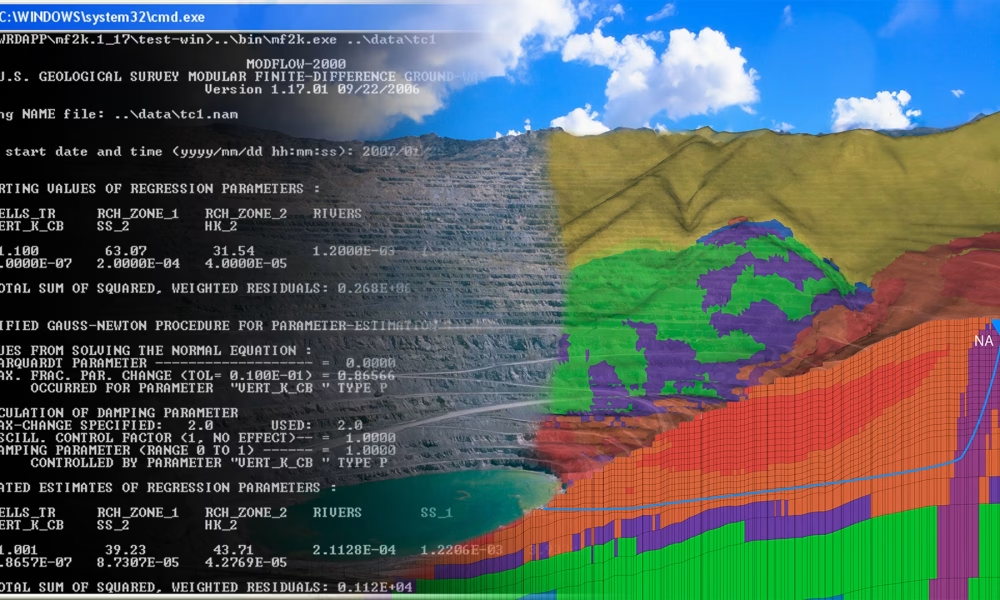
Visual MODFLOW: An industry-standard software for simulating groundwater flow, contaminant transport, and capture zones.
MODFLOW (USG/NWT): A modular finite-difference model for simulating groundwater flow in unstructured grids, allowing for complex geometries.
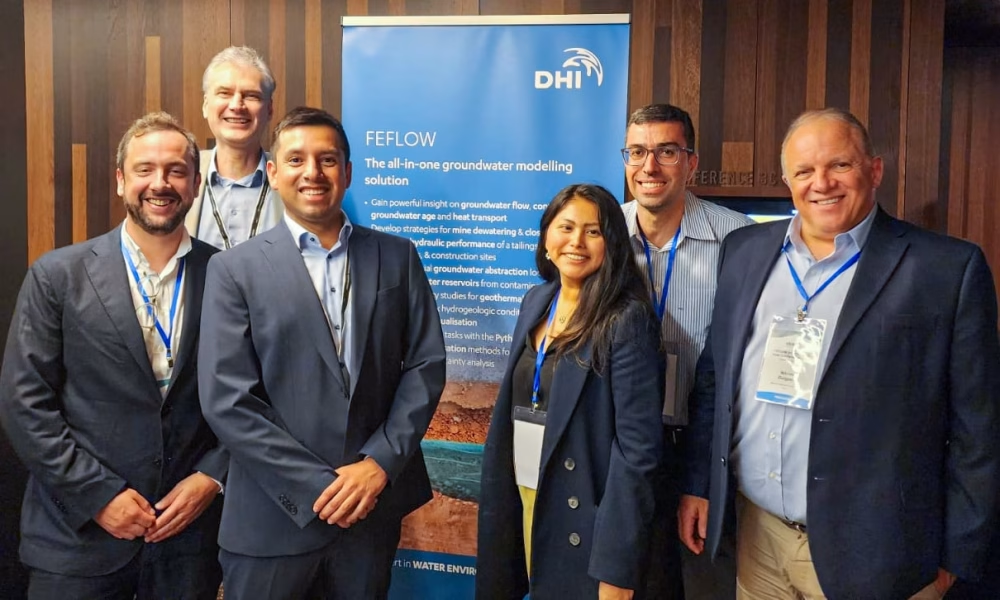
FEFLOW: A finite-element groundwater modeling tool ideal for simulating groundwater flow, contaminant transport, and thermal processes in 3D.
Contaminant Transport Models
MT3DMS: Simulates advection, dispersion, and chemical reactions of contaminants in groundwater systems.
RT3D: Focuses on multi-species reactive transport for complex chemical processes in aquifers.
PICHEM: A robust tool for simulating reactive transport of organic and inorganic contaminants.
PHREEQC: Specializes in geochemical modeling, including equilibrium and kinetic reactions for contaminants in water.
Calibration and Optimization Models
PEST: A parameter estimation tool used for model calibration and sensitivity analysis to improve model accuracy.
UCODE: A universal code for parameter estimation and uncertainty evaluation across various groundwater models.
Geochemical and Coupled Process Models
PHREEQC: A geochemical modeling tool for simulating aqueous chemical interactions, including mineral dissolution and precipitation.
HYDRUS: Used for modeling water movement and solute transport in variably saturated media, including soil and unsaturated zones.
Integrated and Specialized Models
GMS (Groundwater Modeling System): A comprehensive platform that integrates MODFLOW, MT3DMS, and other models to streamline data processing and visualization.
MODPATH: A particle-tracking post-processor for MODFLOW that traces groundwater flow paths.
FLOWPATH: A tool for simulating steady-state groundwater flow in 2D systems, ideal for conceptual modeling.
AIRFLOW/SVE: Simulates airflow and soil vapor extraction processes in unsaturated zones.
Let’s Solve Your Challenges Together
Ready to optimize your water resources, mitigate risks, and ensure sustainable solutions? Partner with our team of experts to harness the power of cutting-edge modeling technology and decades of experience. Contact us today to discuss your project and discover how we can help you make confident, data-driven decisions that protect your resources, environment, and bottom line.
Get in touch now – let’s shape a sustainable future, one model at a time.