- SERVICES
Technology Spotlight | New for 2025
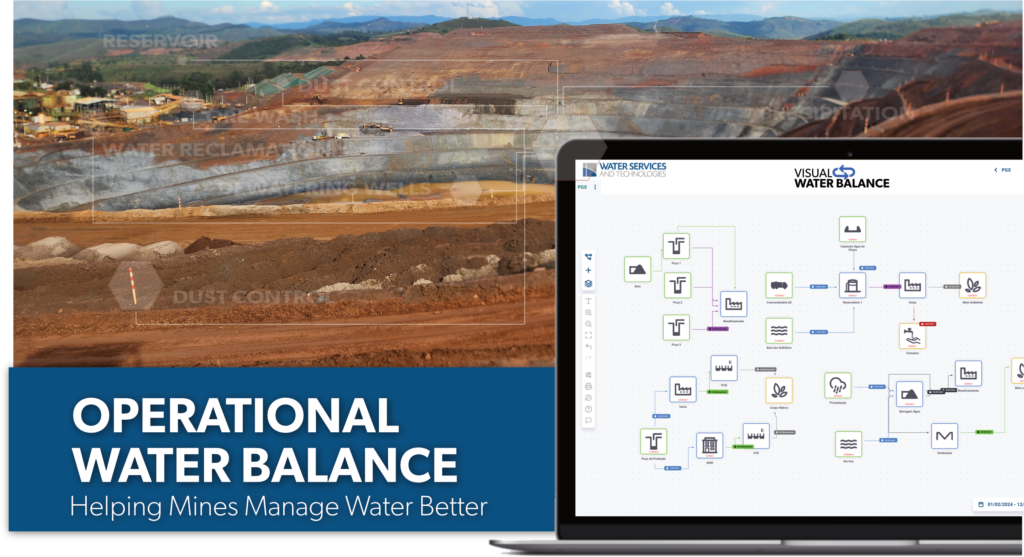
Learn more about how to manage your water balance
- PROJECTS
- DIGITAL
Technology Spotlight | New for 2025
Learn more about how to manage your water balance
- PRODUCTS
Technology Spotlight | New for 2025
Learn more about how to manage your water balance
- EVENTS
- BLOG
WST PFAS Webinar Series: Using Visual PFAS™ to Improve Site Characterization and Conceptual Models

PFAS investigations involve comparing concentrations for multiple PFAS constituents at each monitoring well, and between wells along a groundwater flow path. This webinar presents several case studies which demonstrate the benefit of using Visual PFASTM radial diagram and stacked bar maps to enhance site characterization and improve conceptual models, including:
Visualizing where and by how much PFAS exceed cleanup criteria across a site
Review of precursor transformation pathways which may increase concentrations of more toxic PFAS
Example uses of PFAS ratios to clearly visualize where precursor transformations are occurring along a flow path
Demonstrating where PFAS attenuation is occurring downgradient of source areas
Comparing site concentrations to background levels to evaluate the potential for impacts to soil and groundwater
A wide range of approaches for using Visual PFASTM to characterize sites are illustrated in a hands-on demonstration with an example site.
Presented by:
Grant Carey, Ph.D.
Dr. Grant Carey is President of Porewater Solutions with more than 30 years of experience specializing in the characterization, modeling, and remediation of many impacted sites across North America. Grant also specializes in the development of innovative modeling and visualization tools for conducting PFAS forensic assessments and for evaluating long-term remediation strategies. Grant is currently involved with five SERDP-ESTCP projects where his main research focus is on PFAS transport and remediation. Grant is also an Adjunct Research Professor at Carleton University in Ottawa, Ontario.