

Implementation and Updating of Vale's Global Mining Environmental and Hydrogeological Database
CLIENT
Vale
LOCATION
Global
TIMEFRAME
2019-2020
Project Description
Water Services and Technologies has secured a five-year contract to implement an integrated environmental and hydrogeological data management solution across all VALE units worldwide, based on the Hydro GeoAnalyst (HGA) tool.
The project involves structuring a centralized, corporate database stored in a cloud environment, with more than 30 projects created—one for each VALE operational unit—updated daily.
For each unit, a rollout procedure was conducted, where historical data was analyzed, standardized, validated, and imported into HGA.
Additionally, external suppliers report information to VALE in a standardized manner and in a format that can be easily integrated into the system. Training sessions were provided both in person and via live online sessions, and video lessons were made available within VALE’s E-learning Solution for the technical team.
From the database, in addition to all the visualization tools available in HGA (queries, charts, well profile templates, maps, cross-sections, and 3D plumes), various dynamic reports are generated using Power BI and/or Excel. These reports include consolidated data and analyses displayed in graphs, tables, and maps, and are automatically updated whenever new data is imported or modified in HGA.
Some integrations with external programs, such as PIMS, are active at VALE, ensuring automatic data entry into HGA.
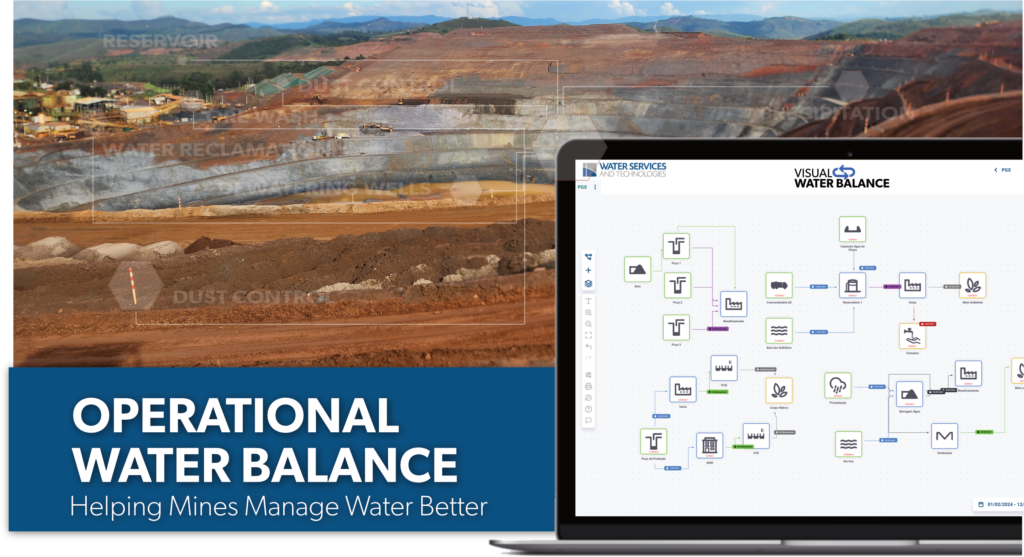
Furthermore, the data stored in HGA is used in VALE’s water balance calculations through the Visual Water Balance tool.
So far, the system has been implemented and is in use at units in Brazil, with upcoming deployments planned for Canada and Malaysia.
Challenges
Vale was looking for a system that could be accessed by anyone, anywhere. The system needed to incorporate information from 33 operational units in a way that would standardize them uniquely. It was important for the system to be easily accessible and have the infrastructure to support users in remote locations.
Unique standardization of information was also crucial for training users in how to use the tool and implementing it in other units. Additionally, the database needed to enable project centralization, mitigating direct costs and insufficient global returns.
Solution
The implemented solution focused on centralizing and standardizing the client’s environmental and hydrogeological data, which were previously scattered. The project migrated the data to a new integrated platform, facilitating the management and accessibility of information. A standard data model was created for Vale’s 33 operational units in Brazil, allowing the centralization of 33 databases into a single system. This model addressed the client’s specific needs in terms of data acquisition, storage, and usage.
Legacy data was migrated to the new database, correcting inconsistencies. Access and viewing permissions were configured for specific users, and the solution was installed in a virtualized environment (Citrix XenApp) with support for the installation process. Integration with various internal systems was developed, enabling automated data entry into the new database.
A testing plan validated the system’s functionalities and permissions, with adjustments made during implementation for each unit. Additionally, laboratory data importation was standardized and automated, and customized manuals were developed. Various training sessions were conducted to ensure engagement and skill development among Vale employees.
Finally, customized reports were created to meet specific management and operational reporting needs, including monitoring quality and quantity, managing monitoring plans, and standardizing information for environmental agencies. These reports are updated automatically, allowing for integrated and efficient data management.
Results
The project results were significant in various areas, bringing operational and strategic improvements to the client. With centralized management in a single system, there was a substantial savings in time and financial resources, especially in IT infrastructure, maintenance, and user training. An overall view of operations became readily available, offering total flexibility in data access, which enhanced quality control and enabled more informed decision-making.
The implemented solution proved to be easily scalable, facilitating its application in other operational units. Additionally, the uniformity and ease of access to the system led to greater user adoption, increasing engagement and efficiency in using the platform. The database was continuously updated, thanks to ongoing support and consultancy, ensuring that the information remained accurate and relevant to the client’s needs.
Highlights:
- Creation of a standardized data model to be used by all company departments
- Restructuring and centralization of the database using the standardized model
- Migration of data from multiple databases to a newly structured database with inconsistency corrections
- Installation and configuration of the solution in a virtual environment in collaboration with the client’s IT team
- Preparation of documentation for installation, maintenance, procedures, and user and administration manuals
- Multiple training sessions on tool usage for general and specific workflow demands
- Assisted operations for daily tasks, user inquiries, bug fixes, and other issues
- On-demand support and consulting after final delivery
Technologies Applied:
- Hydro GeoAnalyst (HGA)
- Microsoft EXCEL
- Power BI
- Python
- Power Query
- Macro VBA
- APIs