
Numerous mining companies were represented in debates on technical, scientific and applied aspects of water resource management and environmental data
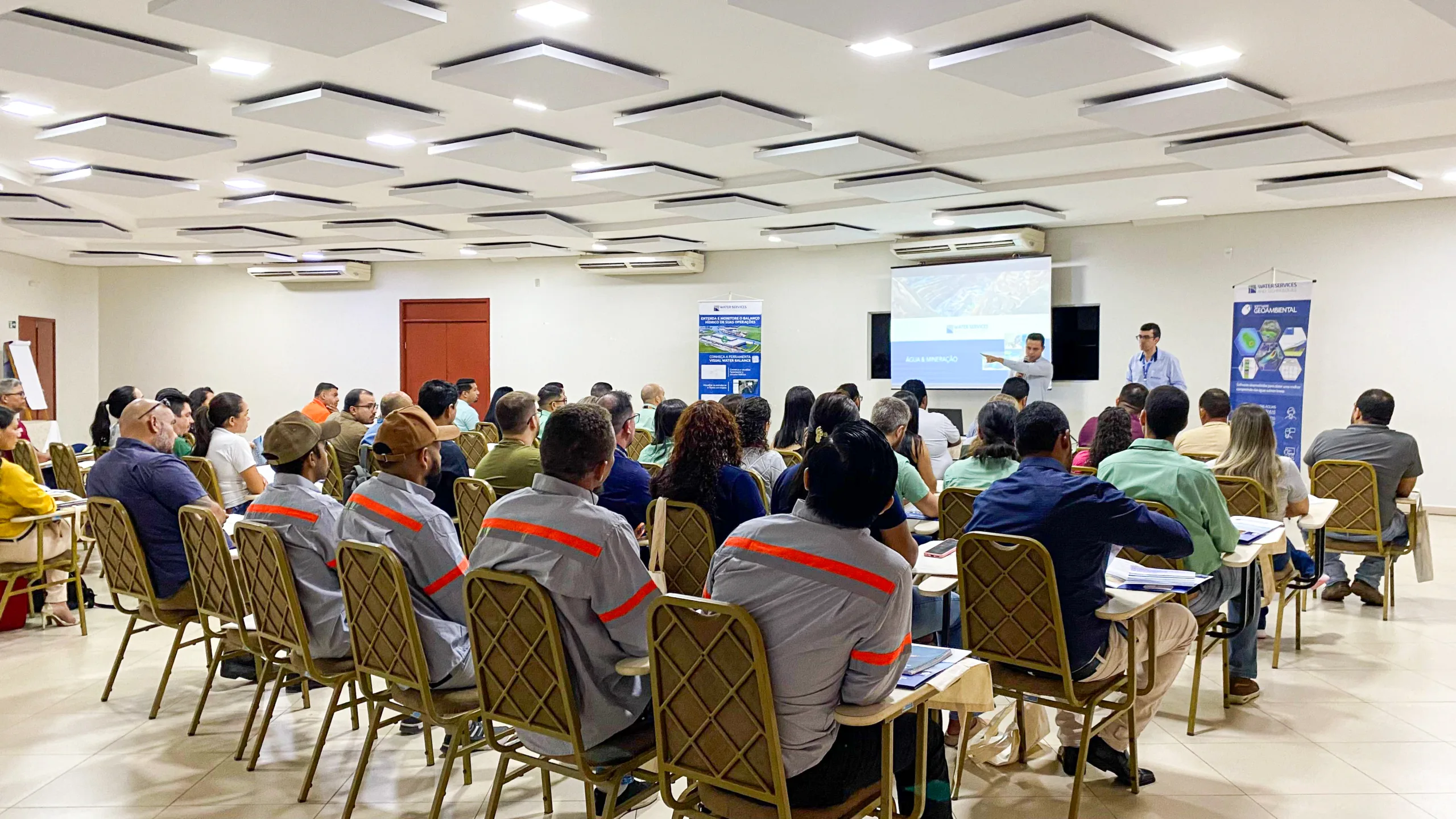
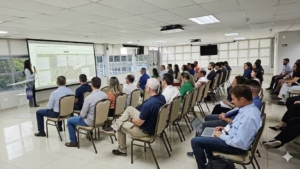
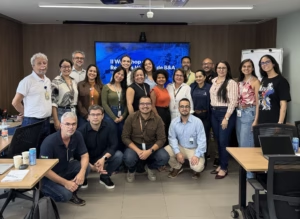
Recently, Parauapebas-Pará hosted a workshop promoted by Water Services and Technologies. The event brought together more than 60 specialists in water resource management, the environment and sustainability, with some of the biggest names in mining in Brazil.
Rafael Albuquerque, director of the Aqueous Geochemistry area at Water Services and Technologies, celebrated the event as a significant milestone for the sector in the region.
“Our workshop in Parauapebas brought together essential debates on the sustainability of water resources in mining, providing a rich exchange of knowledge and experiences, mainly focused on the northern region of Brazil,” he said.
David Soares, Water Resources Management Manager at Water Services and Technologies, highlights the relevance of the event.
“The diverse program featured unprecedented talks by experts from the mining, research and consulting sectors, presenting different points of view that complement each other. In addition, attendees had the opportunity to acquire knowledge and do some quality networking,” he says.
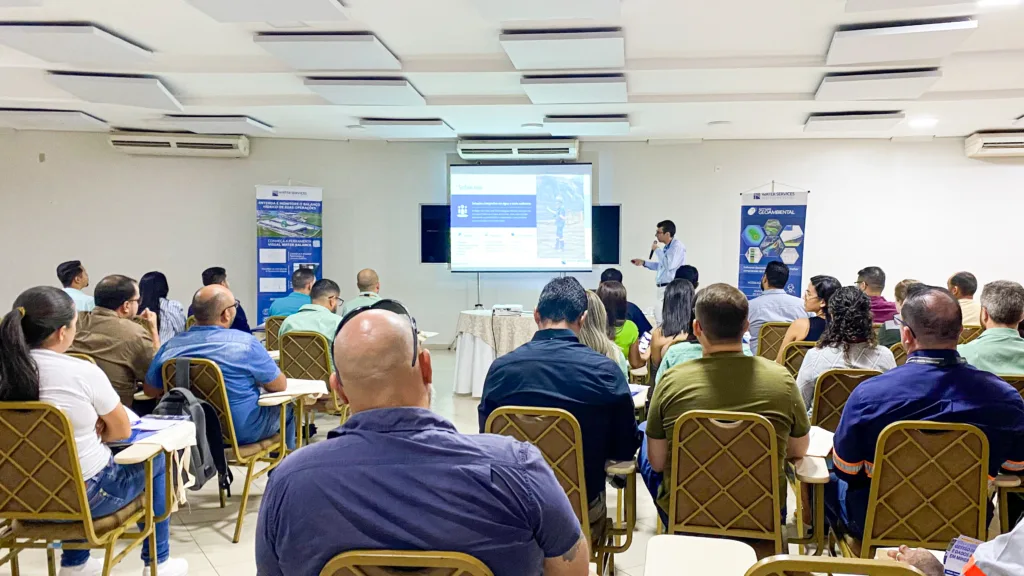
Márcio Silva, from the Vale Institute of Technology, began the meeting by presenting a detailed overview of water resources in the Itacaiúnas River Basin, highlighting the importance of strategic data management in mining projects, which is fundamental for planning and managing mine operations in a sustainable way.
“Having reliable data helps us to understand the hydrographic context, facilitating effective strategic planning for safer and more efficient daily mining operations,” he explains.
Silva emphasizes that a detailed understanding of water resources enables the implementation of water management practices that promote sustainability and ensure compliance with environmental regulations.
“In mining operations, this information is fundamental for optimizing water use, improving treatment and recycling processes, identifying and mitigating water-related risks and avoiding penalties, making operations even more economical,” he comments.
Sabrine Moraes, data management specialist at Water Services and Technologies, presented the benefits of ‘Complete Environmental Data Management, from Planning to Interpretation of Results’.
She pointed out that integrated data management in mining is crucial for optimizing mining operations, ensuring safety and economic efficiency.
“A robust data management system enables the collection and integration of information from various sources, facilitating strategic planning and data-driven decision-making,” she said.
She points out that once the mining company has centralized data, it becomes possible for its managers to carry out predictive analyses that improve resource forecasting, allocation and operations planning.
“Data integration ensures compliance with environmental and safety regulations, reduces operational risks and increases the sustainability of mining operations,” she says.
Bruno Guimarães, a Vale engineer, impressed the participants by demonstrating the use of artificial intelligence in monitoring the Sossego Mine, highlighting how advanced technologies can optimize the management of water resources in mining.
He says that the technologies applied by Water Services and Technologies in the projects in partnership with Vale allow for precise data analysis, improving decision-making by managers and even preventing operational and environmental problems.
“In addition, it is clear that the technology that accompanies the company’s projects drives innovation and the competitiveness of companies by increasing efficiency and, above all, helping us to reduce costs,” he explains.
David Soares and Lucas Salles gave talks on the operational water balance and the water management plan, reinforcing efficient practices in environmental preservation.
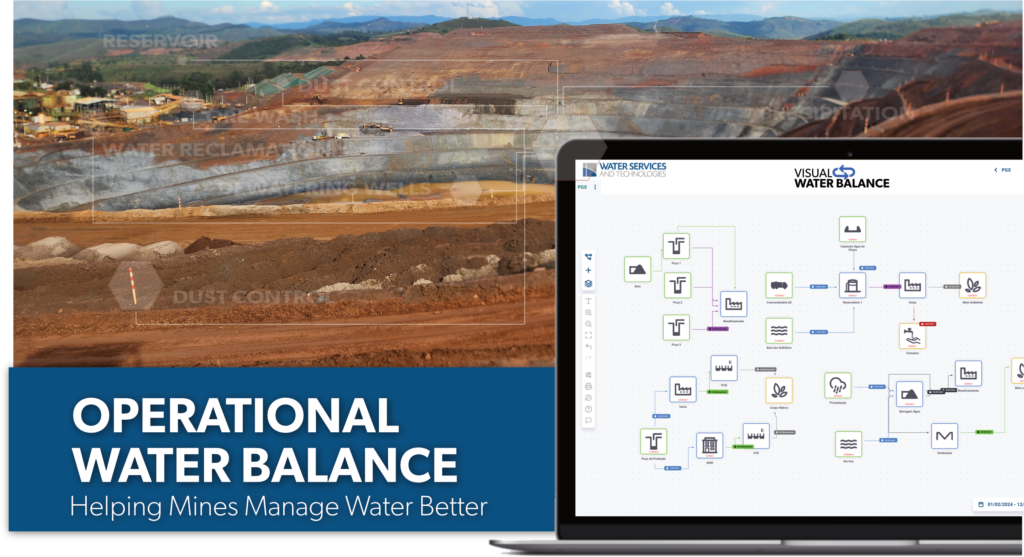
The presentation on ‘Operational Water Balance’ highlighted the importance of managing water resources in mining, focusing on business security, sustainability, reducing operating costs, as well as reuse opportunities and mitigating possible risks.
“To overcome these and other challenges, Water Services and Technologies has developed Visual Water Balance, a tool with a friendly and intuitive interface that allows the creation and management of flowcharts, as well as data analysis through maps and reports, with the possibility of customizing performance indicators according to the specific needs of each company,” said David Soares.
The program continued with the theme ‘Water Management Plan as an instrument for the continuity of mining operations’. Lucas Salles discussed a study carried out by Water Services and Technologies which aimed to implement integrated strategies to promote efficient management of water resources, aimed not only at operational sustainability, but also at environmental preservation.
“Adaptive water resource management is a dynamic and flexible process, capable of responding to uncertainties and environmental changes through a continuous cycle of monitoring, evaluating and adjusting management practices, and this becomes essential in order to mitigate negative impacts, guarantee the sustainability of operations and ensure compliance with environmental regulations,” says Salles.
He adds that this dynamic approach makes it possible to continually adjust management practices based on monitoring and evaluation, promoting a more resilient and efficient operation over time.
These and other points reveal the importance of this model for ensuring the sustainable use of water, an indispensable element in mining, while at the same time promoting the resilience of the ecosystems and communities in which the operation is located.
The presentations by Rafael Albuquerque and Karen Ninanya closed the event with approaches to acid drainage management in mining and hydrogeological and hydrogeotechnical numerical modeling, respectively.
According to the director of the Aqueous Geochemistry area at Water Services and Technologies, Rafael Albuquerque, the assessment of mine drainage in mining is an extremely important subject, as this type of strategy offered by Water Services and Technologies guarantees compliance with strict environmental regulations, as well as protecting the environment and the reputation of companies.
“Solutions aligned with these types of practices not only reduce operating costs in the long term, but also strengthen the sustainability of mining operations and help promote responsible management of natural resources,” says Albuquerque.
The presentation on ‘Numerical Modeling in Water Resources Management’ highlighted that hydrogeological mathematical models are valuable because not only can they be used to improve understanding of the complexity of water systems, but they are also effective in solving challenges related to scenarios in which efficient solutions are needed for excess or even lack of water,” explained Karen Ninanya.
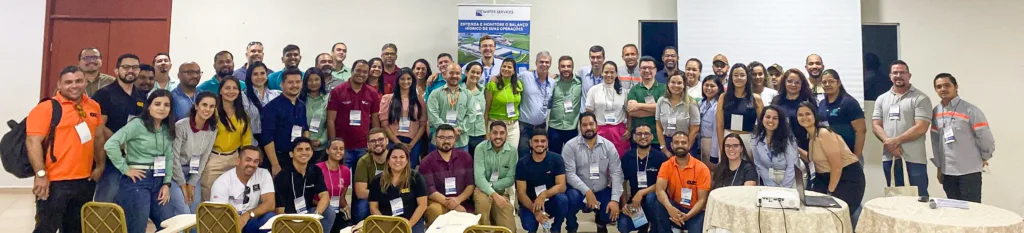
Giselle Parise, an environmental engineer at Vale Salobo Metais, said that this was the first time she had attended a Water Services and Technologies event in person and her expectations were exceeded.
“This workshop gave me access to high-quality content, providing me with a broad understanding of what was presented and, above all, I would like to highlight the fact that I was able to experience a day full of valuable networking,” she commented.
She points out that presentations related to modeling and water balance are of interest to her company, since they are looking to implement solutions in their workflows that support the board’s decision-making, optimizing time and processes.
“We are very interested in Visual Water Balance and other solutions presented by Water Services and Technologies, as these resources will help us to promote sustainability and further optimize our projects at Vale Salobo Metais,” she says.
José Eduardo Conte, from Bemisa, comments on the event. “It’s been a while since I attended a meeting that was so rich in terms of organization, content and partnership possibilities. During our participation, we realized the importance of actions such as monitoring and planning our data, which will result in a future partnership between Bemisa and Water Services and Technologies,” he said.
In addition to the lectures, the workshop provided relaxation and interaction, ending with a happy hour in which participants exchanged ideas, professional experiences and impressions of the event more informally.
Water Services and Technologies would like to thank everyone involved and is already planning future editions in Pará, with the aim of continuing to promote sustainable mining and the efficient management of water resources.
About – Water Services and Technologies has a highly specialized and experienced multidisciplinary team and offers practical, technological and economically viable solutions to address water and environmental challenges in the mining, water and sanitation, industrial and energy sectors. Through offices located in Canada, Kazakhstan and Brazil, we offer solutions in hydrogeology, hydrogeotechnics, aqueous geochemistry, hydrology, data management and technology, maximum quality, efficiency and satisfaction to clients all over the world.
Click here to find out more about Water Services and Technologies