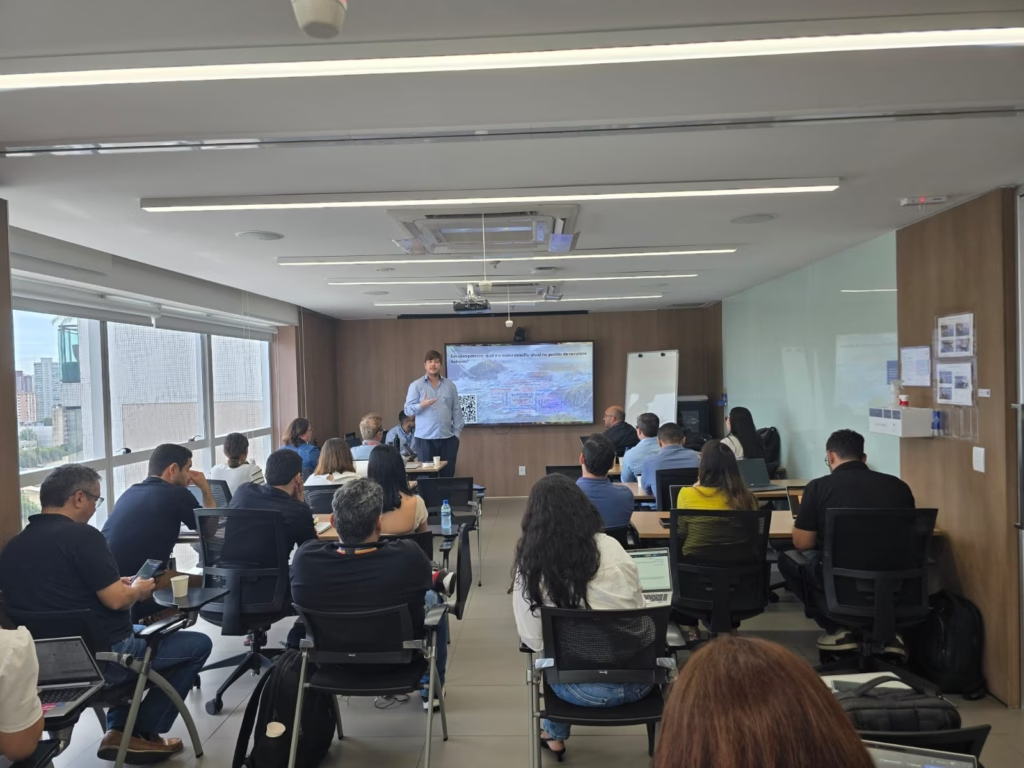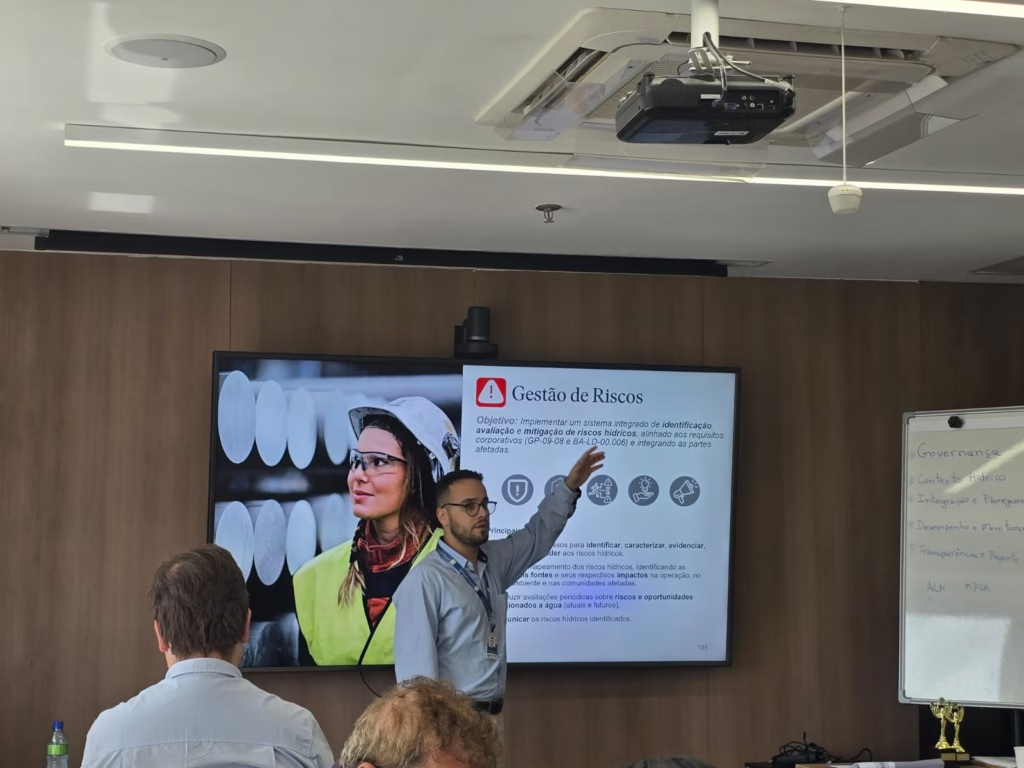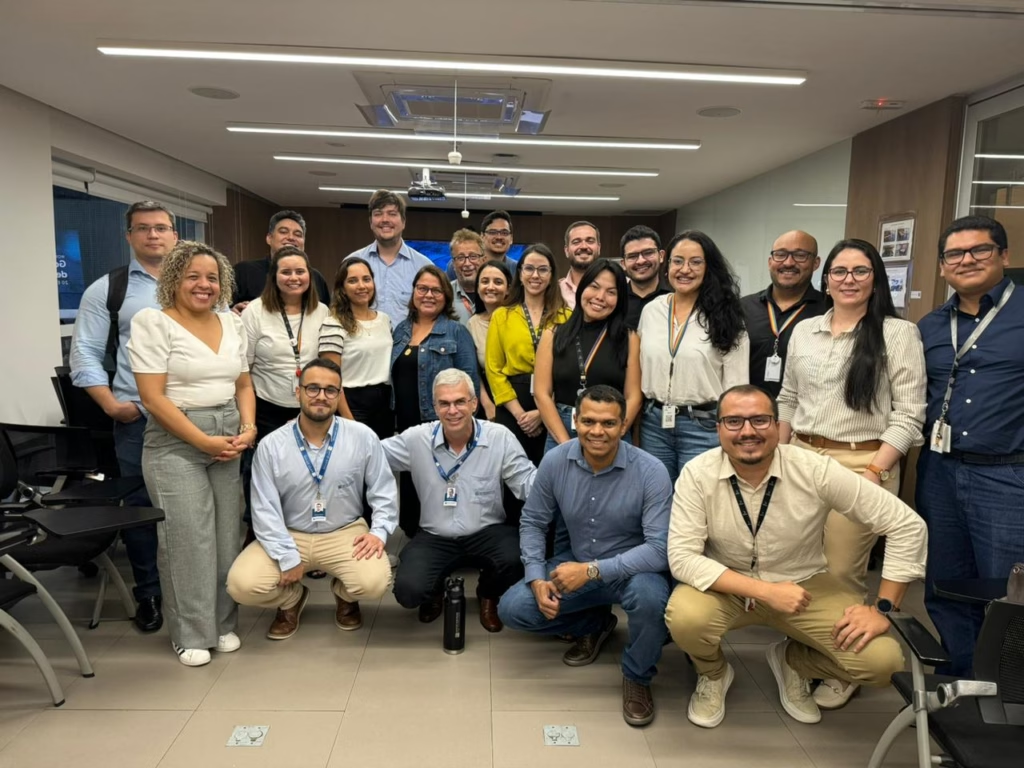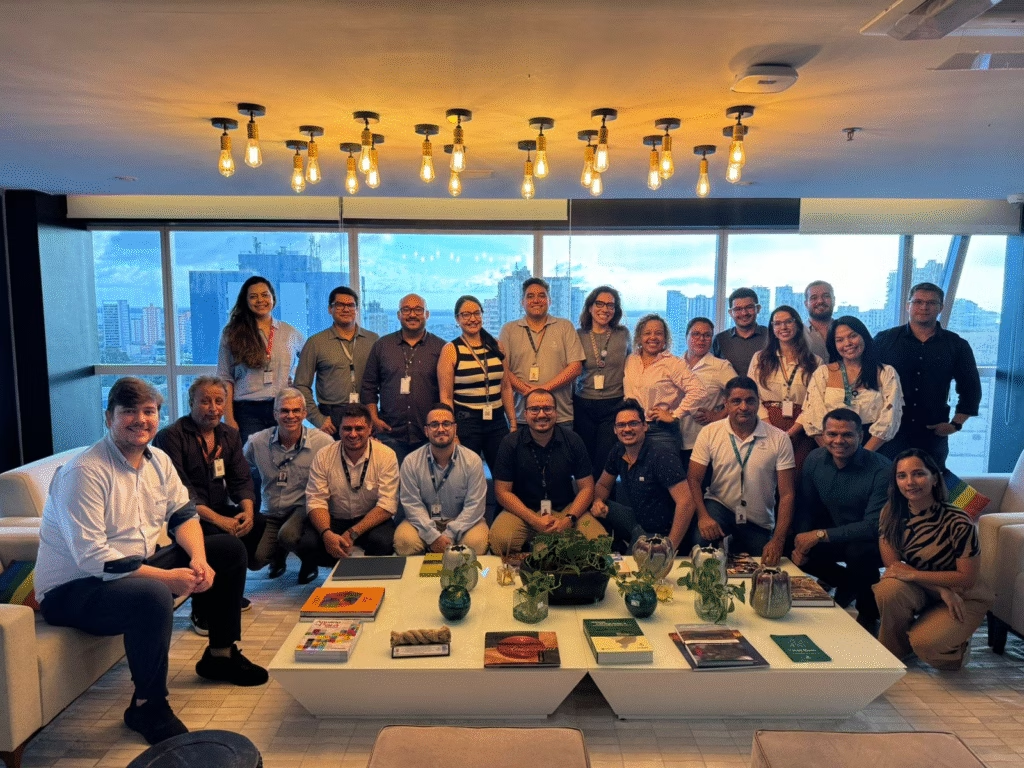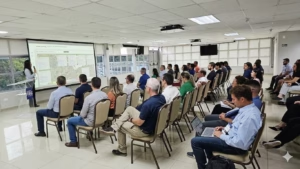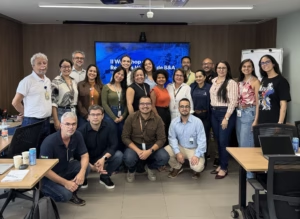

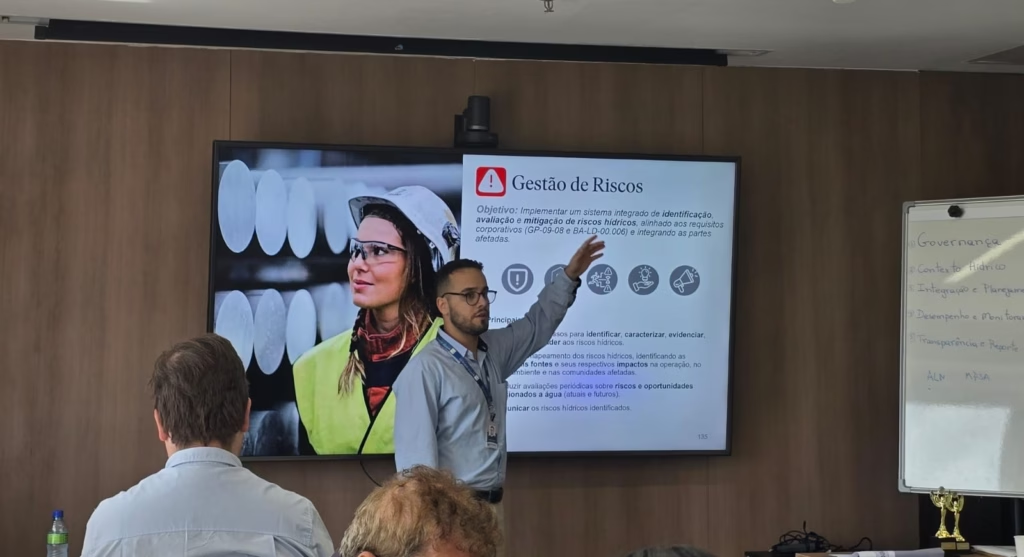
Water Services and Technologies served as the technical facilitator for Hydro’s Bauxite & Alumina Water Governance and Management Workshop in Brazil, promoted by the company’s ESG and Technology departments. The event brought together representatives from Alunorte, Mineração Paragominas, and Albras units, as well as corporate leaders from Hydro Brazil, in a collaborative journey to develop local guidelines for responsible water resource management within the company’s watershed of operation.
The main objective of the event was to support the development of a joint action plan to advance the water maturity of operations, using the Water Stewardship Maturity Framework (WSMF). This tool defines four levels of maturity—Below Basic, Basic, Advanced, and Leader—and Hydro’s goal for 2025 is to achieve the Advanced level across all its operations in Brazil.
Throughout the workshop, detailed assessments were conducted on the current maturity level for each WSMF element. This helped identify good practices for internal sharing, map out gaps, and define strategic actions to drive progress. WST led the presentation of the framework’s core concepts and facilitated collaborative activities focused on governance, hydrographic context, monitoring and control, risk management, stakeholder engagement, and transparency.
“Efficient water management is directly linked to the company’s sustainability commitments, helping to mitigate operational risks, strengthen our social license to operate, and meet global standards such as those of the ICMM. It is a central issue for business competitiveness and resilience,” emphasized Juvenal Neto, Senior Environmental Analyst at Hydro.
A highlight of the workshop was the presentation and discussion of a Local Water Resources Guideline proposal, structured around governance, clear responsibilities, cross-department integration, and strengthened decision-making. Juvenal commented:
“This proposed guideline strengthens corporate governance by establishing an integrated structure of responsibilities and decision-making, promoting better alignment between operational units and strategic company levels.”
The workshop was designed to align corporate strategy with operational realities, aiming to translate guidelines into actionable plans. In this context, Victor Cruz, Hydro’s process consultant, reinforced the topic’s relevance to daily operations:
“Operating in the Amazon is a great responsibility—not only for the sustainable use of natural resources but also for respecting the communities around us, who rely on the forest and rivers for their livelihoods. Managing our operations responsibly, using water in a rational and respectful way, minimizing environmental risks, and following global best practices is one of our top priorities. The water we consume and return to the environment is a topic discussed daily in all our operational meetings.”
The WSMF, used as the methodological foundation of the event, is internationally recognized and aligned with standards such as the Aluminium Stewardship Initiative (ASI), also adopted by Hydro. Victor added:
“The event showed that while we already have many initiatives and practices we consider appropriate, there is still room for improvement.”
At the end of the workshop, concrete action items were defined, with assigned responsibilities and deadlines aimed at strengthening water governance across operations. The initiative offered a renewed perspective on the strategic role of water in corporate decision-making and ESG commitments.
“Water management now has a more robust model—guided by data, clear priorities, and global frameworks like the WSMF. This raises our maturity level and directs our efforts toward impactful and transparent actions,” concluded Juvenal Neto.
In addition to operational topics, the workshop also encouraged reflection on the value of cross-sectoral collaboration in building sustainable solutions:
“Better water management comes from collaborative interaction that must go beyond plant boundaries. We have a great responsibility and must strengthen our ties with external stakeholders,” said Victor.
From a technical standpoint, David Soares, Water Resources Management Manager at WST, highlighted the mining sector’s significant progress in adopting robust practices:
“Hydro’s initiative is a great example—striving to advance in WSMF maturity. Investing in this direction means respecting the operating territory and fostering synergies for sustainable development. It also optimizes resources, enhances corporate reputation, and minimizes potential conflicts.”
Adopting WSMF represents a proactive strategy for mitigating impacts and seizing opportunities related to water resources—a necessary approach in the face of climate change challenges.
Vinicius Araujo, water resources specialist at WST, added:
“Facilitating this workshop with the Hydro team was extremely positive. It showed that water management goes beyond operations—it involves strategic thinking, cross-functional integration, and a clear understanding of the company’s role within the watershed and communities. This initiative demonstrates maturity and a holistic perspective—essential for increasingly strategic water management.”
WST thanks Hydro for the trust placed in leading this process and reaffirms its commitment to providing technical and collaborative solutions to help companies build sustainable and integrated water resource management strategies.