

Hydrogeological Monitoring and Efficiency Assessment of Supply Wells for the Mineral Water Industry
CLIENT
Minalba
LOCATION
Dias D’Ávila, Bahia State, Brazil
TIMEFRAME
2019
Need more info? Contact Us!
Challenges
Evaluate the hydraulic head loss, efficiency, and interference zone of the supply wells in the study area.
Solution
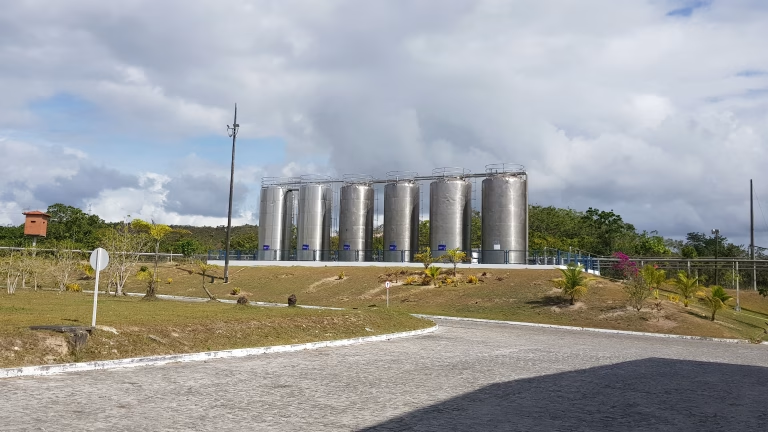
A hydrogeological study was conducted using automatic pressure and temperature sensors (Divers) in five existing tubular wells on the property. Step-drawdown and constant-rate pumping tests were performed, both followed by a recovery test. The results were analyzed and interpreted using AquiferTest software.
Results
The step-drawdown test allowed for the evaluation of head loss and the efficiency of the well where the test was conducted. The constant-rate pumping test enabled the determination of the aquifer’s basic hydrodynamic parameters through the drawdown curves obtained from observation wells. Based on the results, it was possible to project the wells’ area of influence after 30 hours and 100 years of pumping. Additionally, the study provided key conclusions such as defining the theoretical pumping capacity of the main operational source in the study area, the minimum efficiency at which the well should operate, the average hydrodynamic parameters for the aquifer system, and that the regional aquifer drawdown is due to other users’ exploitation rather than the direct influence of the client’s wells.