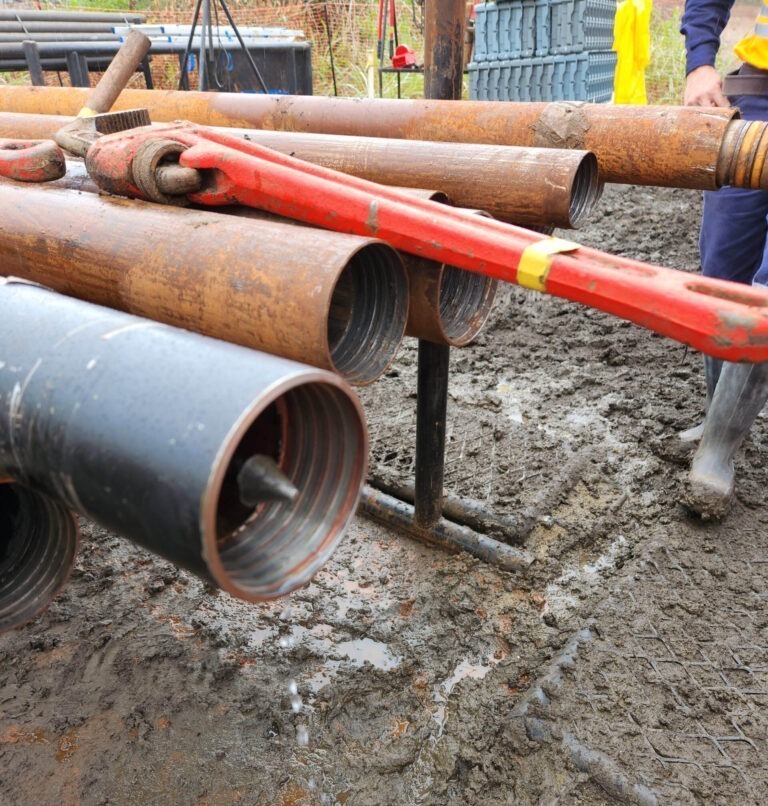

Packer tests are known as Lugeon tests or pressure water loss tests and are one of the tools available for the hydrogeological and geotechnical characterization of fractured rock masses.
This type of test is widely used in the mining industry around the world, as well as in the civil industry to characterize the foundations of major engineering works.
This test plays a crucial role in geotechnical engineering and hydrogeology projects, such as the construction of large dams, tunnels, building foundations and underground works.
It provides essential information for analyzing the stability of structures and understanding the hydraulic behavior of the rock mass.

The aim of the test is to determine the Hydraulic Conductivity (H) of rock masses by means of rotary boreholes. In other words, it provides quantitative information on the circulation of water in fissured rock, in order to judge the possibilities of consolidation by injections.
Compared to slug and pump tests, the Lugeon Test offers specific benefits:
- Localized response: Allows a detailed analysis of the hydraulic characteristics at a specific point, which is useful in projects where permeability varies in the rock mass
- Speed: Faster than the continuous pumping test and the slug test, which depends on the hydraulic response of the well
- Cost: Requires less complex equipment and materials, which can result in lower costs
However, it is essential to consider the applications and limitations of each test. The choice between the Lugeon Test, slug test and pumping test depends on the local conditions, the objectives of the study and the characteristics of the rock mass.
Water Services and Technologies is committed to delivering optimized, accurate and satisfactory results.
Specializing in the use of the Lugeon Test reinforces the company’s commitment to using advanced and efficient technologies to provide integrated solutions that meet the needs and demands of the projects in its areas of operation.