

Hydrogeological Study of Water Availability in Serra da Moeda
CLIENT
Coca-Cola FEMSA
LOCATION
Serra da Moeda, Minas Gerais, Brazil
TIMEFRAME
2022-2023
Need more info? Contact Us!
Challenges
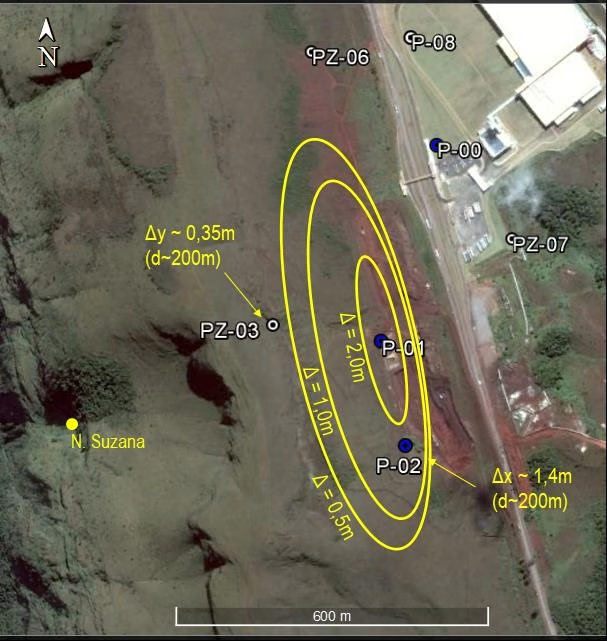
The water resource management study for FEMSA aimed to analyze hydrogeological issues related to the lowering of the aquifer caused by the pumping of wells from the Municipal Basic Sanitation Service, which supply the beverage plant. This project updated and recalibrated the numerical model based on data compiled from 2015 to November 2023, with the goal of simulating different scenarios to meet projected water demands until 2040, as well as assessing potential impacts on the groundwater system.
The main challenges were understanding the hydrogeological dynamics and the current and future groundwater availability of a portion of Serra da Moeda, where there is significant structural control over an area of approximately 13 km in length. Another challenge was determining the aquifer’s hydrodynamic parameters, evaluating the interference between pumping wells, and estimating the extent of the drawdown cone around each well, both individually and when pumped together.
Solution
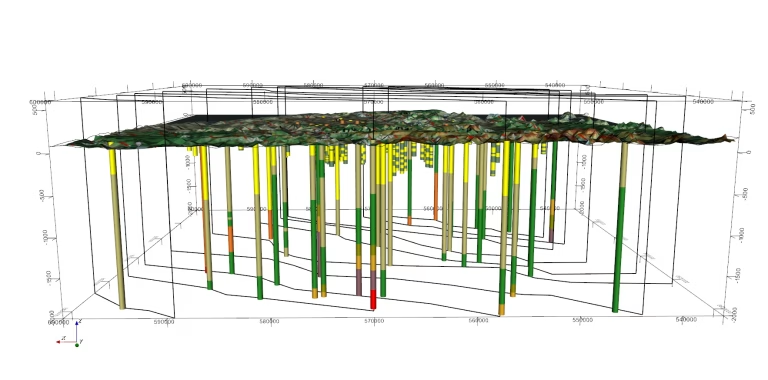
Field research was carried out (including the documentation of over 40 springs) and existing information was collected and analyzed (monitoring data from various sources). The data compilation and analysis included hydrochemical monitoring, detailed structural mapping, and pumping tests with pressure transducer sensors and data loggers for automatic water level monitoring. Based on the collected data, the conceptual model was revised, and a hydrogeological numerical model was constructed. A detailed structural and hydrogeological study was performed. The pumping and observation wells were equipped with monitoring sensors to record water level variations during the pumping tests. Four tests were conducted: first, each of the three pumping wells was tested separately for 72 hours, and then all three wells were pumped simultaneously for 132 hours.
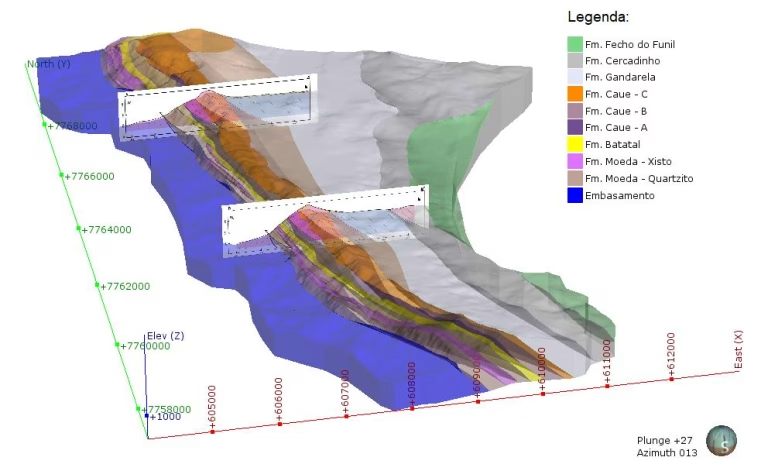
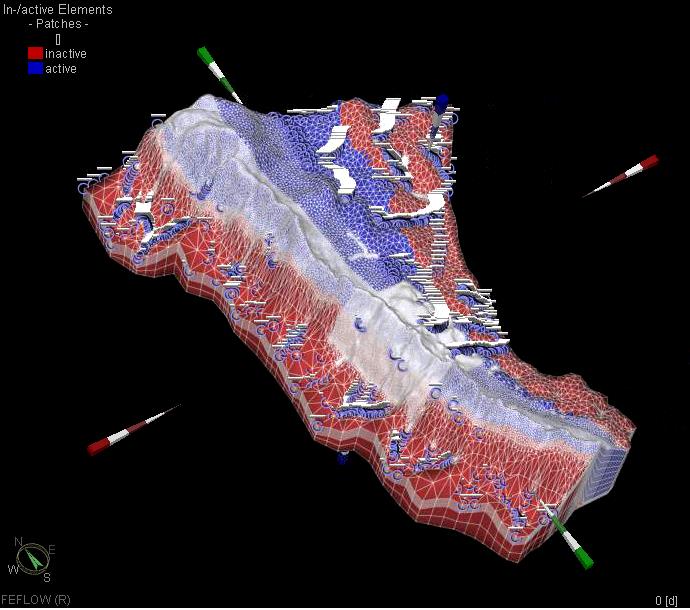
The compilation and analysis of primary and secondary data allowed the construction of a 3D geological model of the area and the development of a flow model using FEFLOW software. A series of simulations was carried out to define a water extraction strategy until 2040, identify potential impacts, and establish mitigation measures.
Results
Based on both detailed conceptual analyses and numerical simulations, it was demonstrated that there is currently no relationship between the pumping of the existing tubular wells and the observed variations in spring flows.
The results of the numerical flow model also indicated that the hydrogeological system is sensitive to long-term precipitation variations.