

Study for the Closure and Decommissioning of Gongo Soco Mine
CLIENT
Vale
LOCATION
Belo Horizonte, Minas Gerais State, Brazil
TIMEFRAME
2017
Need more info? Contact Us!
Challenges
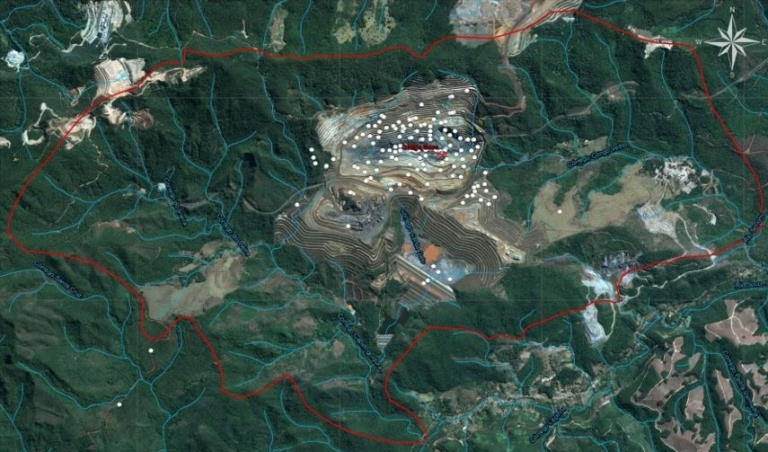
Gongo Soco was a gold mine located in Minas Gerais, Brazil, and played a significant role in the national gold cycle during the 18th and 19th centuries. Once the gold was exhausted, the mine was closed and abandoned until the 1980s, when it was acquired by Socoimex.
In 2000, Companhia Vale do Rio Doce (Vale) took over the mine for iron ore extraction. By 2011, Vale indicated that the mine had reserves to be exploited for a few more years but would prepare for its closure. In 2016, Vale announced the mine’s closure.
As part of the mine’s closure and decommissioning study, a hydrogeological study was conducted, including a review of concepts and assessment of the current and future scenarios of groundwater dynamics. This study provided the necessary geotechnical solutions for decommissioning the mine.
Solution
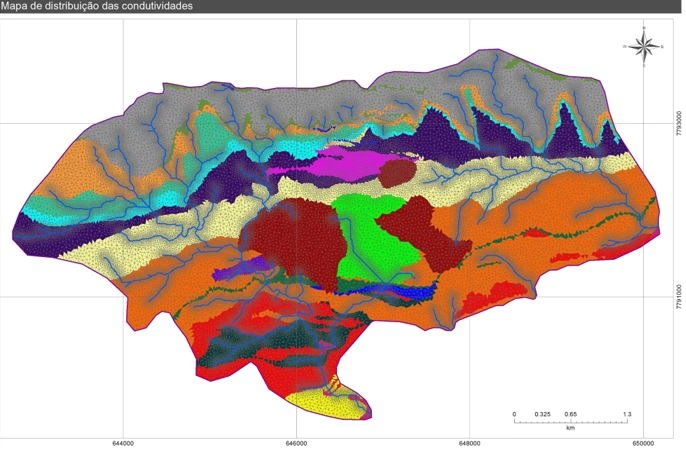
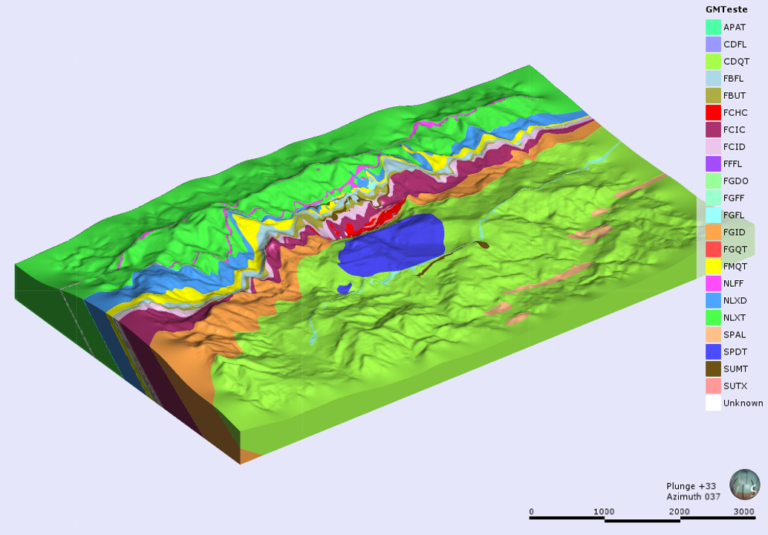
A numerical groundwater flow model was developed to support the geotechnical solutions required for the decommissioning of Gongo Soco Mine, including the numerical modeling of the mine’s pit lake filling. A regional groundwater flow model for the Gongo Soco mine area was developed using FEFLOW software.
Results
The construction of the conceptual physical model provided detailed information on geological structures and stratigraphic control of the area, allowing for the direct export of geological formation geometries into the numerical modeling software.
The mathematical flow model enabled the simulation of various future scenarios, yielding results such as:
- Time to fill the pit lake in years, considering the porosity of formations.
- Natural overflow point of the lake.
- Water surface area and final volume of the pit lake filling.
- Contribution of the aquifer to the pit lake filling, among others.
Simulations revealed that in the first year, there is a higher contribution of groundwater to the pit. As the aquifer recovers, this contribution decreases and tends to stabilize at a daily average value. The time to fill the pit lake is estimated to range between 15 and 18 years.